

Visiting Assistant Professor, Tulane University Law School
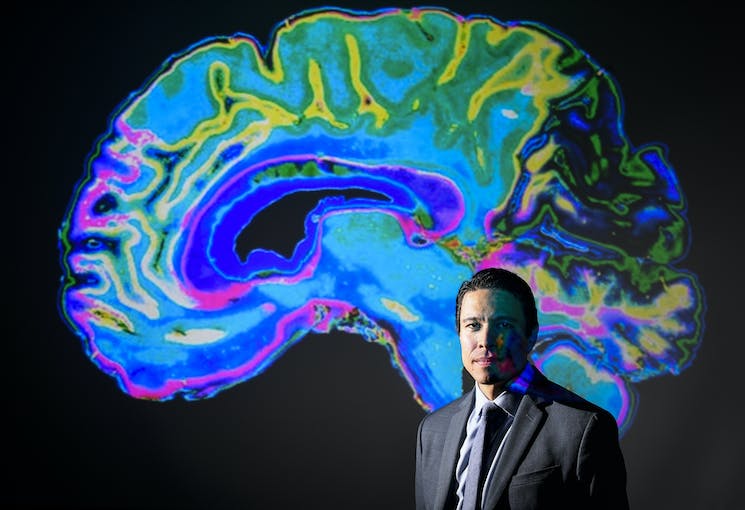
I am a Visiting Assistant Professor at Tulane University Law School and The Murphy Institute. Previously I was a Visiting Scholar at Vanderbilt University Law School and Associate Director of the MacArthur Foundation Law and Neuroscience Project. My research is aimed at improving the creation and administration of law and public policy in the United States. Amongst the areas I’ve researched are crime, education, torts, the human costs of war, and the intersection of law and the mind sciences.
I received my B.A. from the University of Chicago (studying English and Economics), my J.D. from Harvard Law School (where I did my clinical work in a local district attorney’s office), and my Ph.D. in Government and Social Policy (with a dissertation combining political science, psychology, public policy, and law) from the Harvard Government Department and the Harvard Kennedy School.
I am always looking for new collaborators both in and beyond academia, so if you like what you see please send me a note. If you are a student interested in research opportunities, please check out the Research Assistant Hiring page.
In Fall 2011 the New York University Law Review will publish Sorting Guilty Minds, which I co-authored with Morris Hoffman, Owen Jones, Joshua Greene, and Rene Marois. We are now beginning to work on follow-up studies. Abstract: Because punishable guilt requires that bad thoughts accompany bad acts, the Model Penal Code (MPC) typically requires that jurors infer the past mental state of a criminal defendant. More specifically, jurors must sort that mental state into one of four specific categories – purposeful, knowing, reckless, or negligent – which in turn defines the nature of the crime and the extent of the punishment. The MPC therefore assumes that ordinary people naturally sort mental states into these four categories with a high degree of accuracy. The MPC, now turning 50 years old, has previously escaped the scrutiny of comprehensive empirical research on these assumptions underlying its culpability architecture. Our new empirical studies find that even without the aid of the MPC definitions, subjects were able to regularly and accurately distinguish among purposeful, negligent, and blameless conduct. Nevertheless, our subjects failed to distinguish reliably between knowing and reckless conduct. This failure can have significant sentencing consequences in some types of crimes, especially homicide.
I am conducting several studies at the intersection of neuroscience, law, and policy. I have constructed a comprehensive database of 1,500+ bills and resolutions from across the fifty states; have conducted experiments on the public’s perception of neurolaw, and am writing about the distinction between “bodily” and “mental” injury in law.
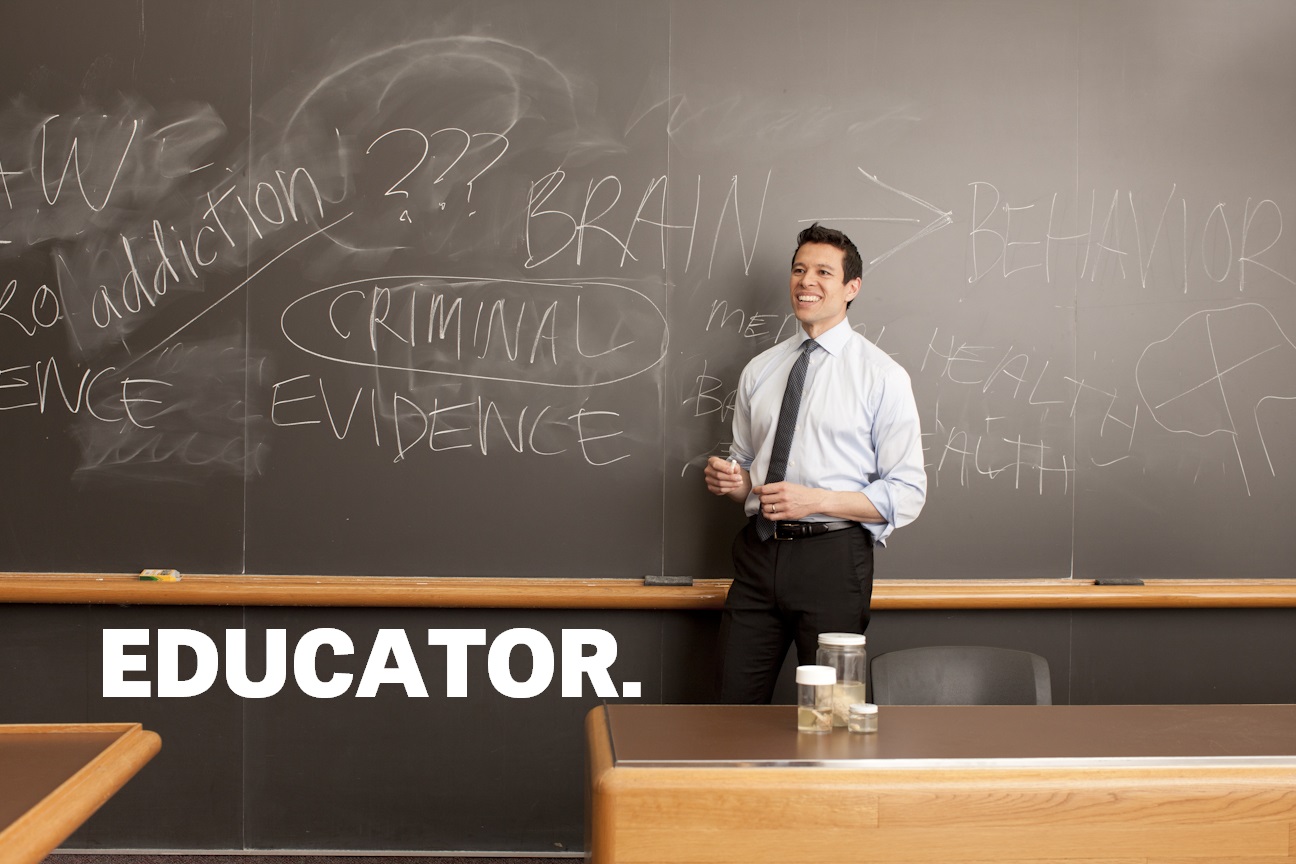
I am also co-authoring (with Owen Jones and Jeffrey Schall, both of Vanderbilt University) the first Law and Neuroscience casebook. The casebook will be published by Aspen Publishers. The casebook includes over 30 chapters in active development, covering topics such as responsibility, evidence, lie detection, adolescent brains, mental health, brain death, addiction, and psychopathy. I am teaching from the draft materials of this casebook in Fall 2011 in my “Law and the Brain” seminar at Tulane Law School. Additional information about the book is available here: www.vanderbilt.edu\lawbrain . Please contact me if you would like more information on the book, or would like to review the draft materials.
The culmination of six years of research, The Casualty Gap was published in 2010. The book, which I co-authored with friend and former Harvard graduate school classmate Douglas Kriner (now an Assistant Professor of Political Science at Boston University), shows how American war casualties have hailed disproportionately from socio-economically disadvantaged communities since the 1950s and explores the ramifications of these gaps for politics, policymaking and the vibrancy of American democracy. We wrote this op-ed featured in the Los Angeles Times on Memorial Day Weekend 2010.
In conjunction with my research on neurolaw, I am continuing to work in this policy domain, but now shifting my focus from fatal to non-fatal casualties. I am beginning to explore questions related to veterans’ mental health, veterans in the criminal justice system, and coverage for brain injuries sustained during combat.
America’s urban school districts educate a majority of the country’s children, and many of these big cities continue to face a myriad of challenges in achieving acceptable levels of student achievement. One possible route to reform, promoted heavily by the Obama administration, is to put big city mayors in charge of school districts. Through a series of empirical studies (including the co-authored 2007 book, The Education Mayor), I have examined the effect of these mayoral control laws on student achievement, district financial health, and public confidence in the school system. While earlier work suggested clear gains from mayoral involvement, I am presently completing new empirical studies which raise important questions about the long-term efficacy of these statutes.
One of these studies, Community Support For Mayoral Control Of Urban School Districts: A Critical Reexamination, is an empirical analysis arguing that statutory safeguards for democracy — in the form of citywide referenda on mayoral control — are not adequate because of unequal patterns of participation.